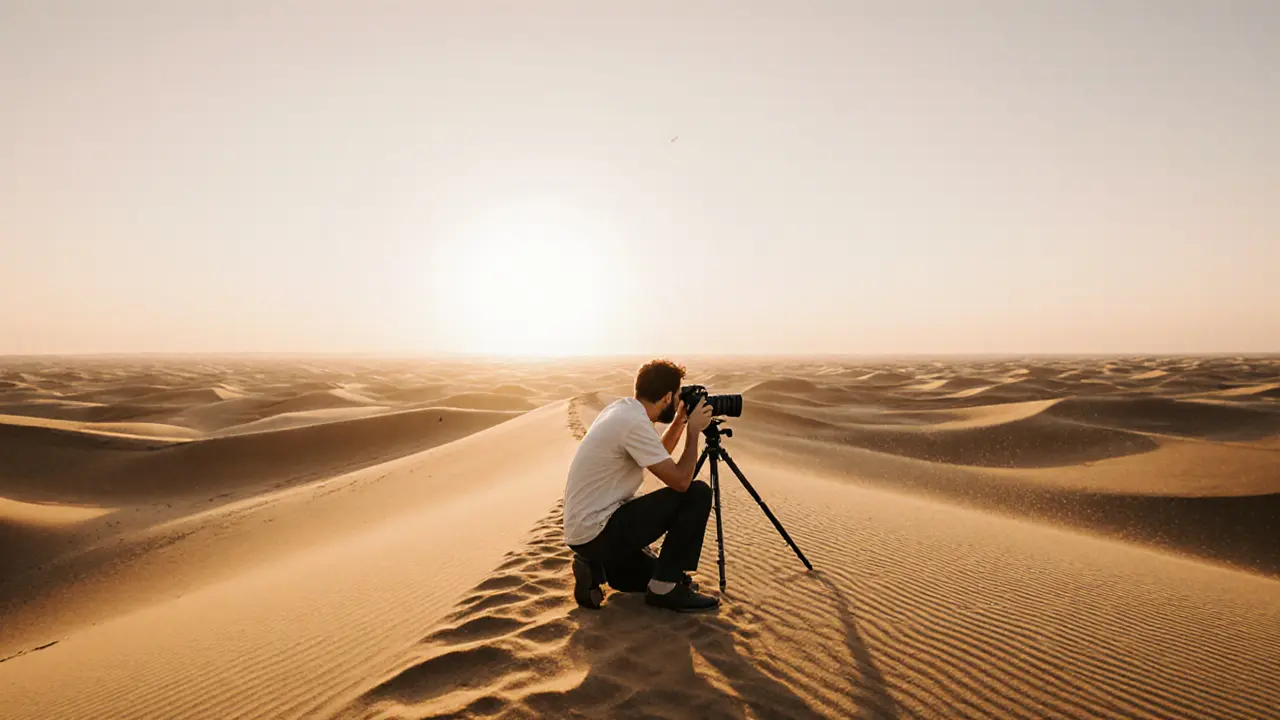
There’s a quiet magic in the desert at sunrise that no filter can replicate. The sand, still cool from the night, glows like molten gold as the sun climbs over the horizon. Your camera’s shutter clicks, and for a moment, you’re not just taking a photo-you’re capturing time. This is what a desert safari becomes when you stop being a tourist and start being a photographer.
Why the Desert Calls to Photographers
The Dubai desert isn’t just sand. It’s a living, shifting canvas. Wind sculpts the dunes into waves that roll for miles, each crest different from the last. At noon, shadows carve deep grooves into the slopes. At dusk, the whole landscape turns copper, then rose, then violet. No two days look the same. That’s why photographers keep coming back.
Unlike cityscapes with fixed angles and lighting, the desert changes with the weather, the season, even the phase of the moon. A light wind can erase a ridge overnight. A sudden storm leaves behind wet sand that mirrors the sky like glass. You don’t just photograph the desert-you respond to it.
Essential Gear for Desert Photography
You don’t need the most expensive camera, but you do need the right tools. Here’s what works:
- Wide-angle lens (16-35mm): Captures the scale of the dunes. A 24mm lens is perfect for showing how the sand flows into the horizon.
- Telephoto lens (70-200mm): Isolates details-camel tracks, a lone acacia tree, the curve of a dune’s shadow.
- Sturdy tripod: Wind kicks up dust. A lightweight tripod won’t hold steady. Use one with a hook to hang your camera bag for extra stability.
- Extra batteries and memory cards: Cold mornings drain batteries faster. Sand gets into everything. Bring twice as many cards as you think you’ll need.
- Camera rain cover or sealed bag: Even if it’s not raining, sand is the real enemy. Seal your gear when not in use.
And never forget a hat, sunglasses, and a bandana. Sand in your eyes ruins more shots than bad exposure.
Best Times to Shoot
Golden hour isn’t just a buzzword-it’s the only time you’ll get the kind of light that makes desert photos unforgettable.
Before sunrise: Arrive at least 45 minutes before the sun peeks over the horizon. The air is still. The sand holds the last of the night’s coolness. The shadows are long and soft. This is when you’ll capture the dunes in their most sculpted form.
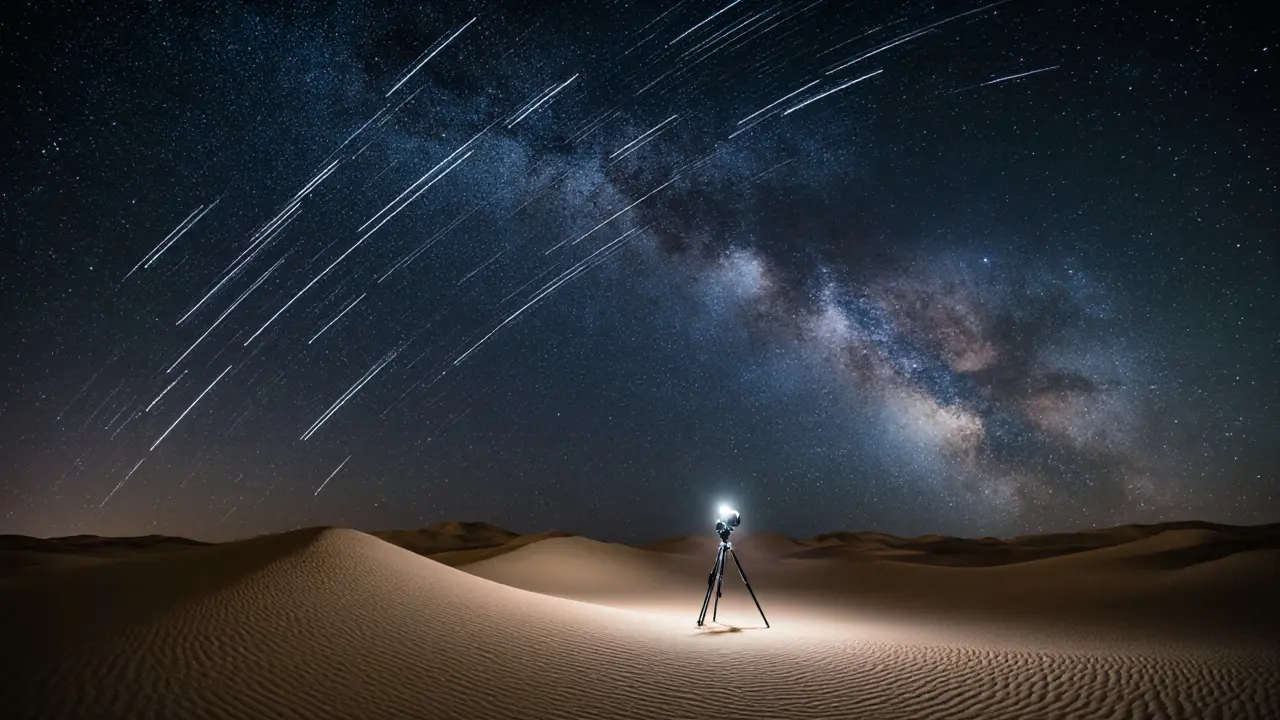
After sunset: The sky turns from orange to deep indigo. The dunes lose their sharp edges, becoming silhouettes. If you’re lucky, the moon rises, turning the sand silver. Long exposures here turn the sky into a streak of stars.
Avoid midday. The sun is too harsh. Shadows vanish. Colors bleach out. Even professional photographers put their cameras away between 11 a.m. and 3 p.m. unless they’re going for high-contrast, abstract shots.
Composition Tricks That Work
There’s a reason so many desert photos look the same: people shoot the same way. Break the mold with these simple tricks.
- Use leading lines: Let the curve of a dune draw the eye into the frame. Follow the ridge from foreground to horizon.
- Include a single subject: A lone camel, a Bedouin tent, a boot print in the sand. One small element makes the vastness feel human.
- Shoot from low angles: Get down on your knees. The dune rises above you, dominating the frame. It feels bigger. More powerful.
- Wait for movement: A desert fox darting across a slope. A group of riders silhouetted against the light. Motion adds life to stillness.
Don’t just point and shoot. Walk. Circle the dune. Climb to the top. Look back. The best shot is often the one you didn’t expect.
Wildlife and Cultural Moments
The desert isn’t empty. It’s alive-if you know where to look.
Look for the Arabian oryx, a rare antelope with long, straight horns. They’re shy, but you’ll find them near the edges of the desert where shrubs grow. The desert fox is easier to spot at dawn, its large ears catching the morning breeze. And don’t miss the sand gazelle, sprinting across the flats like a ghost.
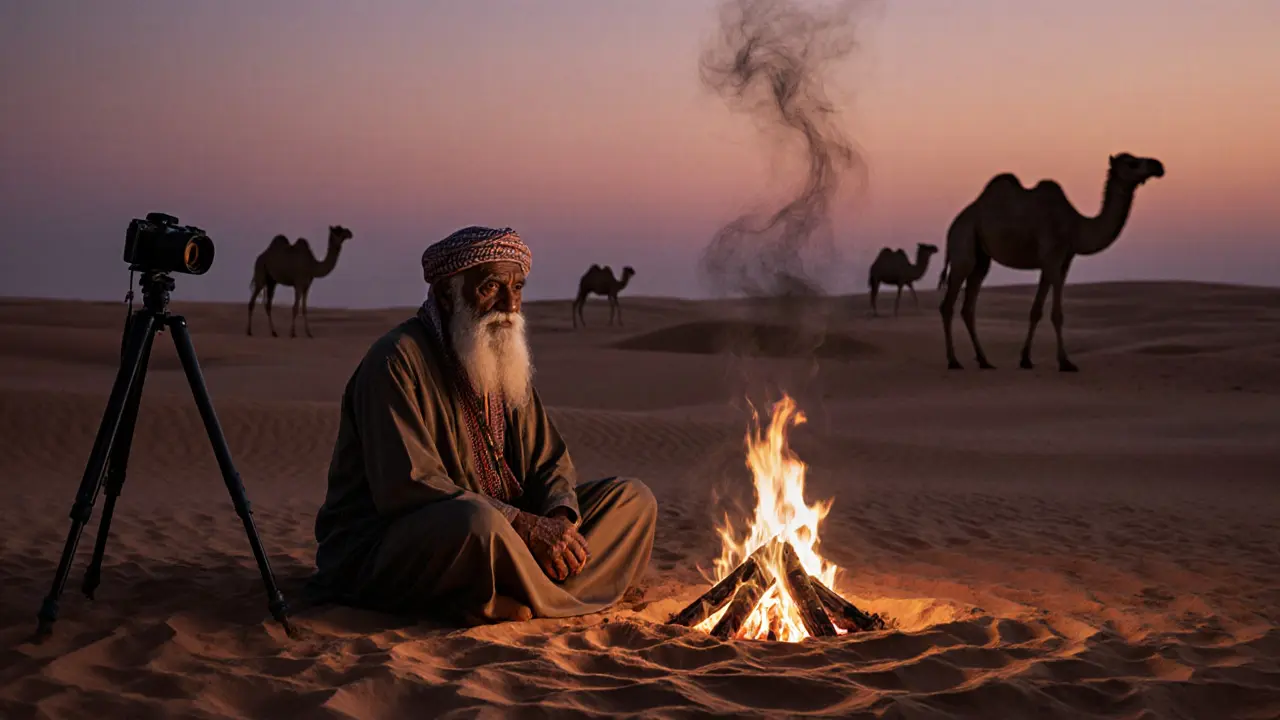
At the end of the day, many safari tours stop at a Bedouin camp. That’s your chance to photograph the real culture. Not the staged camel rides or fake henna tattoos. Watch the elders sip cardamom coffee. Capture the way the firelight flickers on their faces. The sound of a oud being played at dusk. These are the moments that turn a photo into a story.
Post-Processing: Less Is More
Don’t overdo it. The desert doesn’t need filters. It needs truth.
Start by adjusting exposure to bring out the shadows without crushing the highlights. The dunes have texture-don’t flatten it. Increase clarity slightly to let the grain of the sand show. Desaturate just a touch. The golden tones should feel warm, not cartoonish.
Remove dust spots. Always. Sand gets into your sensor. Check your images on a big screen. Zoom in. Clean the sensor before your next shoot.
And never apply a preset that makes everything look like a postcard from Instagram. Real desert photos don’t scream. They whisper.
What to Avoid
There are mistakes even experienced shooters make.
- Shooting with a phone: Phones can’t handle the dynamic range. The sky blows out. The shadows disappear. Save your phone for quick reference shots.
- Ignoring the wind: If the sand is blowing, stop shooting. Dust on your lens ruins the whole day. Wait for calm.
- Chasing the same shots as everyone else: The iconic dune at Al Marmoom? It’s beautiful. But it’s been photographed a thousand times. Find your own spot. Ask a local guide where the quiet dunes are.
- Forgetting the sky: The desert sky is one of the clearest on Earth. At night, it’s a river of stars. Bring a tripod and try a 20-second exposure. You’ll see things your eyes can’t.
Final Tip: Be Patient
The desert doesn’t rush. Neither should you.
Some of the best shots come after you’ve sat still for 20 minutes. The wind drops. A shadow stretches. A bird flies across the frame. You didn’t plan it. You didn’t force it. It just happened.
That’s the real gift of desert photography. It’s not about capturing beauty. It’s about being still enough to let beauty find you.
What’s the best time of year for desert safari photography?
The best months are November through March. Temperatures are mild (18-26°C), the air is clear, and the sand holds texture without being too hot to touch. Summer (June-August) is too hot-over 40°C-and haze from humidity ruins long-distance shots. Winter also means clearer skies for night photography.
Can I do a desert safari on my own for photography?
Technically yes, but it’s risky. The desert is vast and disorienting. GPS can fail. Sand dunes hide washes and soft spots that can trap vehicles. Most photographers join guided tours for safety and access. Guides know where the light hits best, where wildlife is active, and where the sand is firm enough for driving. They’ll drop you off at golden hour and pick you up when you’re done.
Do I need a permit to photograph in the Dubai desert?
For personal, non-commercial use, no permit is needed. You can photograph freely in protected desert areas like Al Marmoom or Lahbab. But if you’re shooting for a magazine, ad, or film, you need approval from Dubai’s Media Office. Commercial shoots require a license and often an escort. Always check current rules before planning a professional project.
What camera settings work best for desert landscapes?
Use manual mode. Set your aperture to f/8-f/11 for sharpness across the frame. Keep ISO low (100-200) to avoid noise. Shutter speed depends on light: 1/125s at midday, 1-30 seconds at dawn/dusk. Use a remote shutter or timer to avoid camera shake. Focus manually on the horizon or use focus stacking for maximum depth.
Is it safe to photograph wildlife in the desert?
Yes, if you stay at a distance. Never approach animals. Use your telephoto lens. The Arabian oryx and desert fox are wild and can be unpredictable. Keep noise low. Move slowly. Most wildlife will avoid you if you’re quiet. Never feed them or try to attract them with food. Respect their space-they’re the real owners of the desert.